
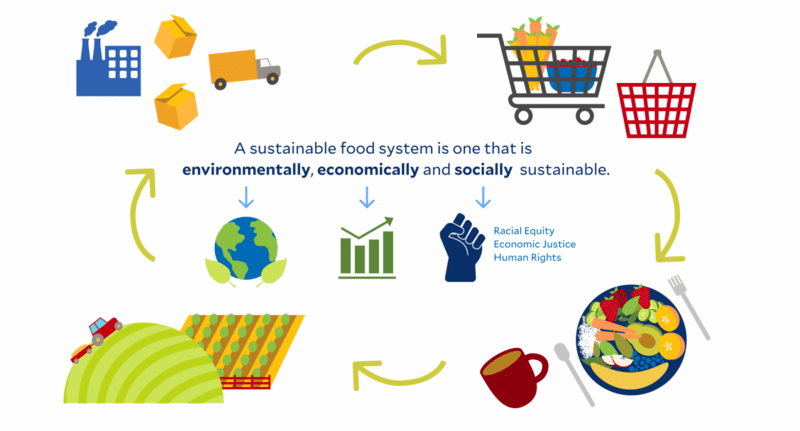
Introduction:
Sustainable economic development and sustainable food systems are interdependent and essential for the long-term prosperity and well-being of people and the planet. Sustainable economic development aims to achieve economic growth in a socially inclusive, environmentally responsible, and economically viable way that meets the needs of the present generation without compromising the ability of future generations to meet their own needs. In contrast, sustainable food systems focus on producing, distributing, and consuming food in a way that is environmentally, socially, and economically sustainable. Both sustainable economic development and sustainable food systems play a significant role in creating a more resilient, equitable, and prosperous food system that can meet the needs of present and future generations. In this context, the Canadian agrifood sector is an essential part of the country’s economy, accounting for approximately 6.7% of Canada’s Gross Domestic Product (GDP) in 2020 and employing approximately 2.3 million people. In this article, I will explore some cutting-edge and clever strategies for smart agriculture that can help promote sustainable economic development and sustainable food systems.
Defenitions:
1- Sustainable economic development is an approach to economic growth that aims to meet the needs of the present generation without compromising the ability of future generations to meet their own needs. It involves achieving economic growth in a way that is socially inclusive, environmentally responsible, and economically viable over the long term.
Sustainable economic development recognizes that economic growth must be coupled with social and environmental sustainability, and that these three pillars are interdependent. It also acknowledges the finite nature of natural resources and the need to use them in a way that ensures their availability for future generations.
In practice, sustainable economic development involves balancing economic growth with the preservation and enhancement of social and environmental capital. This can include investments in renewable energy, sustainable agriculture, and green infrastructure, as well as policies and regulations that promote social equity and environmental protection.
Overall, sustainable economic development is an important approach to creating long-term prosperity and well-being for people and the planet, and is essential to achieving a sustainable future.
2- Sustainable food systems refer to the production, distribution, and consumption of – food in a way that is environmentally, socially, and economically sustainable. Such systems aim to provide healthy and nutritious food to people while also promoting environmental stewardship, social equity, and economic prosperity.
Sustainable food systems focus on reducing the environmental impact of food production by promoting practices that conserve natural resources, minimize waste, and reduce greenhouse gas emissions. This includes reducing the use of chemical fertilizers and pesticides, promoting sustainable land use practices, and reducing food waste through better storage and distribution systems.
Sustainable food systems also promote social equity by ensuring that all people have access to healthy and nutritious food. This includes promoting local food systems that support small-scale farmers and food producers, improving access to healthy food in underserved communities, and reducing food insecurity and malnutrition.
Finally, sustainable food systems promote economic prosperity by creating new opportunities for businesses and entrepreneurs in the food industry. This includes promoting local food businesses, supporting innovation and entrepreneurship in the food sector, and creating new jobs in sustainable food production and distribution.
Overall, sustainable food systems aim to create a more resilient, equitable, and prosperous food system that can meet the needs of present and future generations. By promoting sustainable food production, distribution, and consumption, we can help to protect the environment, promote social equity, and support economic growth and development.
Statistics
According to Statistics Canada, the agrifood sector accounted for approximately 6.7% of Canada’s Gross Domestic Product (GDP) in 2020 (Statistics Canada, 2021). It’s worth noting that this figure includes both agriculture and food processing activities.
The number of people employed in the agrifood sector in Canada was approximately 2.3 million in 2020 (Statistics Canada, 2021).
This includes both direct employment in agriculture and food processing, as well as indirect employment in related industries such as transportation, wholesale, and retail.
It’s worth noting that the COVID-19 pandemic has had a significant impact on employment in the agrifood sector, particularly in areas such as food service and hospitality. However, the sector has remained an important source of employment and economic activity in Canada, and is expected to continue to play a key role in the country’s future economic growth and development.
In 2019, Canadian households spent an average of $9,594 on food, accounting for 10.7% of their total household expenditures (Statistics Canada, 2020).
This includes food purchased from stores, restaurants, and other food service establishments.
It’s worth noting that the COVID-19 pandemic has had a significant impact on food spending patterns in Canada, with many households shifting their spending towards grocery stores and home-cooked meals. However, food remains an important and necessary expenditure for Canadian households, and understanding spending patterns and trends can provide valuable insights into the state of the food system and the broader economy.
According to the latest available data from Statistics Canada, in 2016, there were approximately 69.2 million hectares of land devoted to agricultural production in Canada. This represents about 7% of Canada’s total land area (Statistics Canada, 2018).
It’s worth noting that the amount of land used for agricultural production can vary from year to year depending on a variety of factors, including weather conditions, crop prices, and land use policies. Additionally, the definition of agricultural land can vary depending on the context and the specific criteria used to classify land use.
Sustainable food system and sustainable economic development
A sustainable food system ensures that food production, processing, distribution, consumption, and waste management are environmentally sound, socially responsible, and economically viable. When food systems are sustainable, they contribute to the long-term economic development of a region or country in several ways:
- Increased Food Security: A sustainable food system provides a stable supply of nutritious and affordable food, which reduces the risk of food insecurity and malnutrition. This improves the overall health and productivity of a population, leading to economic growth.
- Job Creation: Sustainable food systems create jobs in agriculture, food processing, distribution, and waste management, which can help to reduce unemployment and increase income levels.
- Economic Resilience: Sustainable food systems are more resilient to shocks such as climate change, natural disasters, and pandemics. This helps to reduce economic losses and ensure that food production and distribution can continue in the face of adversity.
- Environmental Sustainability: A sustainable food system reduces the environmental impact of food production and consumption by minimizing waste, reducing greenhouse gas emissions, and conserving natural resources. This helps to ensure that natural resources are available for future generations, leading to long-term economic sustainability.
Overall, sustainable food systems are essential for sustainable economic development, as they provide a foundation for long-term growth and prosperity that benefits both people and the planet.
A few cutting-edge and clever strategies for smart agriculture
Here are some innovative and smart solutions for smart agriculture:
- Precision Agriculture: Precision agriculture uses technologies such as GPS, drones, and sensors to monitor crops and provide farmers with detailed information on soil quality, water levels, and crop health. This enables farmers to optimize their use of resources, reduce waste, and increase yields.
- Vertical Farming: Vertical farming involves growing crops in vertically stacked layers using artificial lighting and controlled environments. This allows farmers to grow crops year-round in urban areas and reduces the need for land, water, and pesticides.
- AI and Machine Learning: Artificial intelligence (AI) and machine learning (ML) can be used to analyze data from sensors and other sources to optimize crop management. This includes predicting weather patterns, identifying pest outbreaks, and predicting crop yields.
- Aquaponics: Aquaponics is a combination of aquaculture (fish farming) and hydroponics (growing plants in water) that allows farmers to grow crops and raise fish in a closed-loop system. This reduces water usage and waste and provides a sustainable source of protein and vegetables.
- Robotics and Automation: Robotics and automation can be used to automate tasks such as planting, harvesting, and spraying, reducing the need for manual labor and improving efficiency.
These are just a few examples of the innovative and smart solutions being developed for smart agriculture. As technology continues to advance, we can expect to see even more exciting developments in this field.
What are some creative ways to maintain the sustainability of Canada’s food system?
There are several innovative solutions to keep the food system in Canada sustainable. Here are a few examples:
- Vertical Farming: Vertical farming is a method of growing crops in vertically stacked layers, using artificial light, temperature control, and soil-free systems. This approach requires less water and land than traditional farming, and can reduce greenhouse gas emissions by eliminating the need for transportation.
- Plant-Based Meat Alternatives: Plant-based meat alternatives, such as Beyond Meat and Impossible Foods, have become increasingly popular in recent years. These products provide a more sustainable alternative to meat production, as they require less land, water, and energy to produce.
- Agroecology: Agroecology is a method of farming that uses ecological principles to create sustainable and resilient food systems. This approach involves using natural systems, such as crop rotation, intercropping, and biological pest control, to produce food in a way that is more sustainable and resilient.
- Sustainable Seafood: Sustainable seafood refers to fish and seafood that is harvested or farmed in a way that is environmentally sustainable. This includes practices such as reducing bycatch, protecting habitats, and using responsible aquaculture practices.
- Food Waste Reduction: Food waste reduction involves reducing the amount of food that is wasted in the food system. This can include better storage and distribution systems, as well as innovative approaches to repurposing and using food waste.
Overall, these are just a few examples of the many innovative solutions that are being developed to keep the food system in Canada sustainable. By promoting sustainable practices and supporting innovation and entrepreneurship in the food sector, we can create a more resilient, equitable, and prosperous food system for the future.
Is there a connection between a sustainable food system and a sustainable economy?
A sustainable food system ensures that food production, processing, distribution, consumption, and waste management are environmentally sound, socially responsible, and economically viable. When food systems are sustainable, they contribute to the long-term economic development of a region or country in several ways:
Increased Food Security: A sustainable food system provides a stable supply of nutritious and affordable food, which reduces the risk of food insecurity and malnutrition. This improves the overall health and productivity of a population, leading to economic growth.
Job Creation: Sustainable food systems create jobs in agriculture, food processing, distribution, and waste management, which can help to reduce unemployment and increase income levels.
Economic Resilience: Sustainable food systems are more resilient to shocks such as climate change, natural disasters, and pandemics. This helps to reduce economic losses and ensure that food production and distribution can continue in the face of adversity.
Environmental Sustainability: A sustainable food system reduces the environmental impact of food production and consumption by minimizing waste, reducing greenhouse gas emissions, and conserving natural resources. This helps to ensure that natural resources are available for future generations, leading to long-term economic sustainability.
Overall, sustainable food systems are essential for sustainable economic development, as they provide a foundation for long-term growth and prosperity that benefits both people and the planet.
Some examples of sustainable food systems in Canada:
- FoodShare Toronto: FoodShare Toronto is a non-profit organization that works to promote food security and sustainable food systems in Toronto. They operate a range of programs, including school food programs, community gardens, and farmers markets, that promote access to healthy and sustainable food.
- Compost Montreal: Compost Montreal is a social enterprise that collects food waste from households and businesses in Montreal and uses it to create compost that is sold to farmers and gardeners. This reduces waste, promotes sustainable agriculture, and creates economic opportunities in the local food system.
- Cowichan Green Community: The Cowichan Green Community is a non-profit organization in British Columbia that promotes food security and sustainable food systems. They operate a range of programs, including community gardens, food preservation workshops, and a farmers market, that promote local food production and consumption.
- Food4Good: Food4Good is a social enterprise in Ottawa that operates a range of programs, including community gardens, food education workshops, and a mobile market, that promote access to healthy and sustainable food in low-income communities.
- UBC Farm: The UBC Farm is a teaching and research farm at the University of British Columbia that promotes sustainable agriculture and food systems. They operate a range of programs, including community-supported agriculture, farm-to-school programs, and food systems research, that promote sustainable food production and consumption.
These are just a few examples of the many sustainable food systems initiatives taking place in Canada. By promoting sustainable food systems, we can build a more resilient, equitable, and sustainable food system that benefits both people and the planet.
Some examples of farms in Canada that are known for their sustainable food practices:
- Beechwood Market Garden: Located in Victoria, British Columbia, Beechwood Market Garden is a small-scale organic farm that uses regenerative agriculture practices to grow a variety of vegetables and fruits. They use techniques like crop rotation, cover cropping, and natural pest management to maintain soil health and minimize environmental impact.
- Elmridge Farm: Elmridge Farm is a family-owned farm located in Centreville, Nova Scotia, that has been practicing sustainable agriculture for over 30 years. They specialize in pasture-raised poultry and grass-fed beef, using rotational grazing practices that promote soil health and animal welfare.
- Ferme des Quatre-Temps: Located in Hemmingford, Quebec, Ferme des Quatre-Temps is a diversified farm that produces vegetables, fruits, grains, and livestock using regenerative agriculture practices. They use techniques like cover cropping, composting, and intercropping to promote soil health and biodiversity.
- Hockley Valley Farm: Hockley Valley Farm is a family-owned farm located in Orangeville, Ontario, that specializes in organic vegetables, fruits, and pastured meats. They use techniques like crop rotation, cover cropping, and natural pest management to maintain soil health and minimize environmental impact.
- Upper Canada Heritage Farm: Located in North Augusta, Ontario, Upper Canada Heritage Farm is a small-scale family farm that raises heritage breeds of livestock, including cattle, pigs, and chickens. They use rotational grazing and pasture management techniques to promote animal welfare and environmental sustainability.
These are just a few examples of the many farms across Canada that are committed to sustainable food practices. By supporting these farms, we can help to build a more sustainable and resilient food system that benefits both people and the planet.
In conclusion, sustainable economic development aims to achieve economic growth while preserving social and environmental sustainability. Sustainable food systems refer to the production, distribution, and consumption of food in an environmentally, socially, and economically sustainable way. These systems promote environmental stewardship, social equity, and economic prosperity. The agrifood sector accounted for approximately 6.7% of Canada’s GDP in 2020 and employed approximately 2.3 million people in the same year. A sustainable food system ensures that food production, processing, distribution, consumption, and waste management are environmentally sound, socially responsible, and economically viable. Such systems contribute to increased food security, job creation, economic resilience, and environmental sustainability, which are essential for sustainable economic development. Finally, some cutting-edge and clever strategies for smart agriculture include precision agriculture, vertical farming, and aquaponics, among others. These strategies promote sustainability, efficiency, and profitability in agricultural practices, contributing to sustainable economic development.
Reference:
Statistics Canada. (2021). Gross domestic product, income and expenditure, fourth quarter 2020. https://www150.statcan.gc.ca/n1/daily-quotidien/210304/dq210304a-eng.htm
Statistics Canada. (2021). Table 14-10-0068-01 Labour force characteristics by industry, annual. https://doi.org/10.25318/1410006801-eng
Statistics Canada. (2020). The Daily: Canadian Household Spending on Goods and Services, 2019. https://www150.statcan.gc.ca/n1/daily-quotidien/201029/dq201029a-eng.htm
Statistics Canada. (2018). Agriculture, forestry, fishing and hunting economic indicators, annual. https://www150.statcan.gc.ca/t1/tbl1/en/tv.action?pid=3610023801
 SAFAVI, M