
What would happen if people were in the same social class?
Using General Social Survey data (Canadian at work and home) 2016, I conducted a study to find the answer to this question.
Is there any link between social class and health inequality?
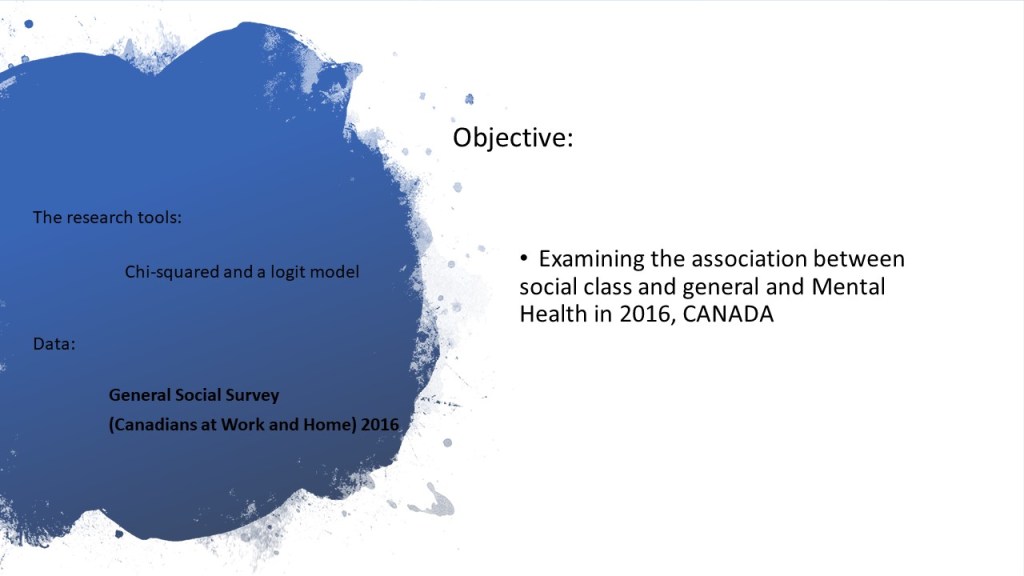
It is better to take a look at some variables before proceeding.
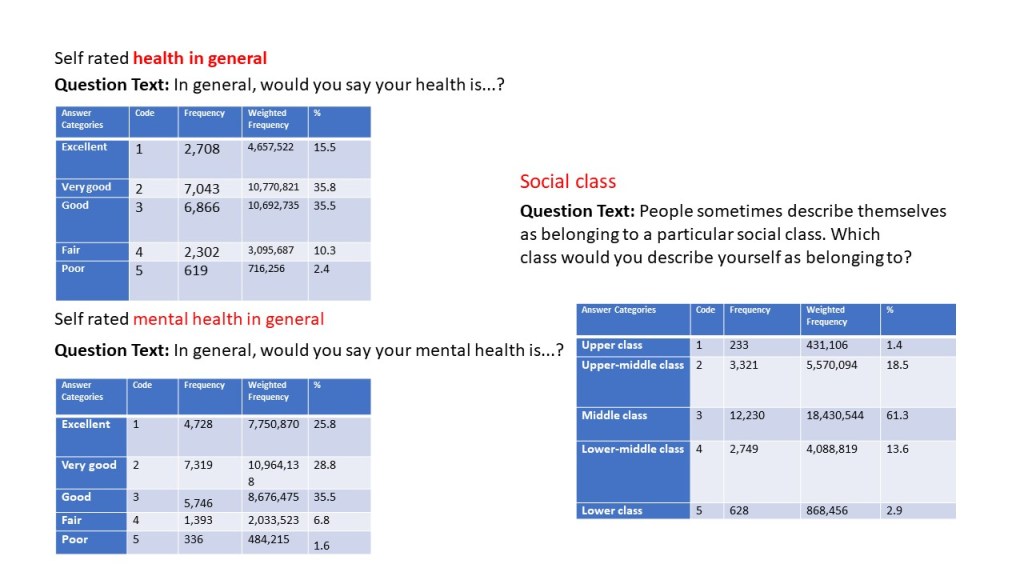
Social class is a concept in sociology and commonly is a group of people of similar status, commonly sharing a comparable level of power and wealth.
Some sociologists agree that social class is not an income level. For this matter, I analyzed the relationship between social class and level of income.
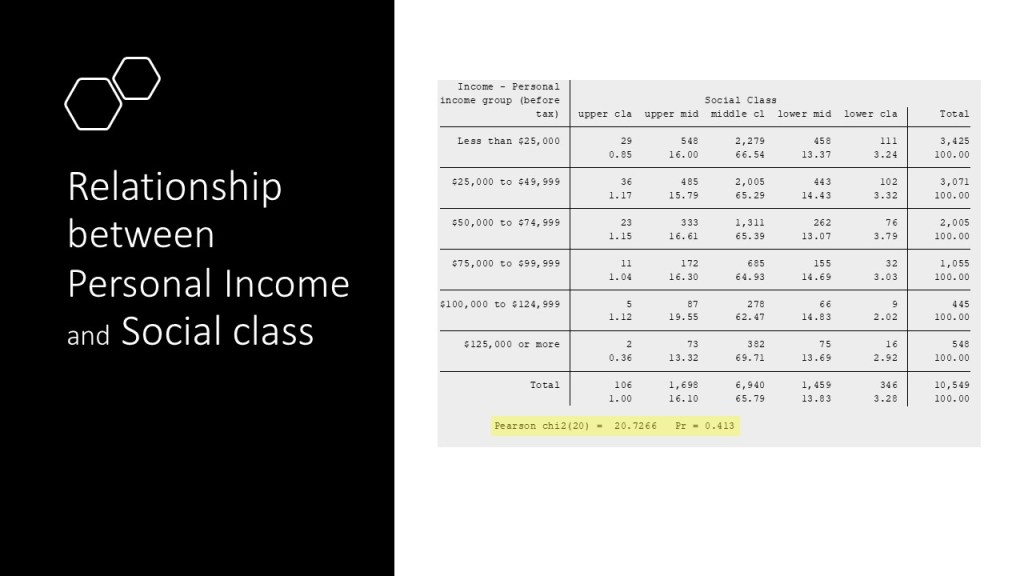
This slide shows a Two-way table using social class and personal income level, which are categorical data.
The null hypothesis is No relationship between social class and level of income.
As you can see, the P-Value of the Chi-square test can not reject the null hypothesis.
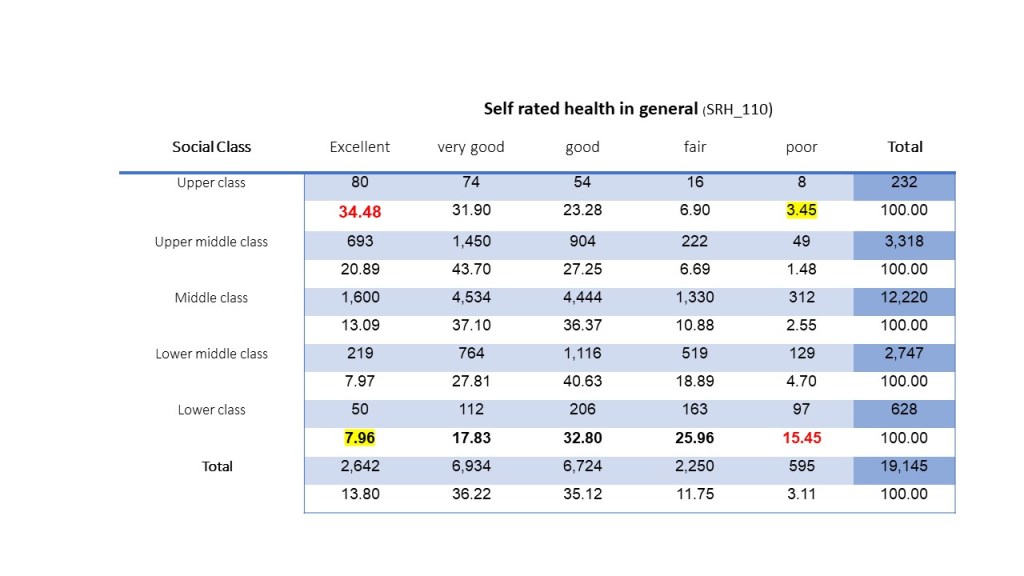
In this slide, we have a Two-way table using social class and self-rated health in general.
We might indicate that more participants in the Upper class chose Excellent for health in general than the lower class.
34.48 percent of the upper class selected Excellent. However, 7.96 percent of the Lower class chose Excellent.
On the other hand, 3.45% of participants in the upper class selected the poor, and 15.45% of participants in the lower class selected poor.
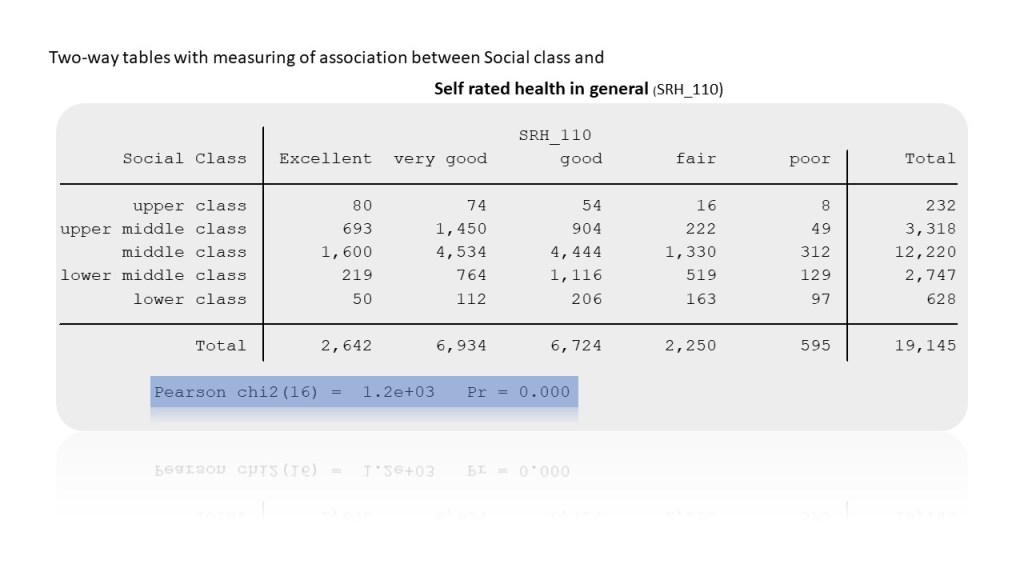
I conducted a Chi-square analysis for two variables. My Chi-square result is significant. The P-value is 0.000. We can say that our variables are not independent. The relationship between social class and health, in general, is significant.

I ran another Chi-square test for social class and mental health. In this case, we see that 45.26% of participants in the upper class chose Excellent health, and just 1.72 percent of the upper class selected poor health. On the other hand, 11.94 percent of the lower class chose poor health.

We have the same result for the Chi-Square test for mental health. There is a significant association between social class and mental health in general.
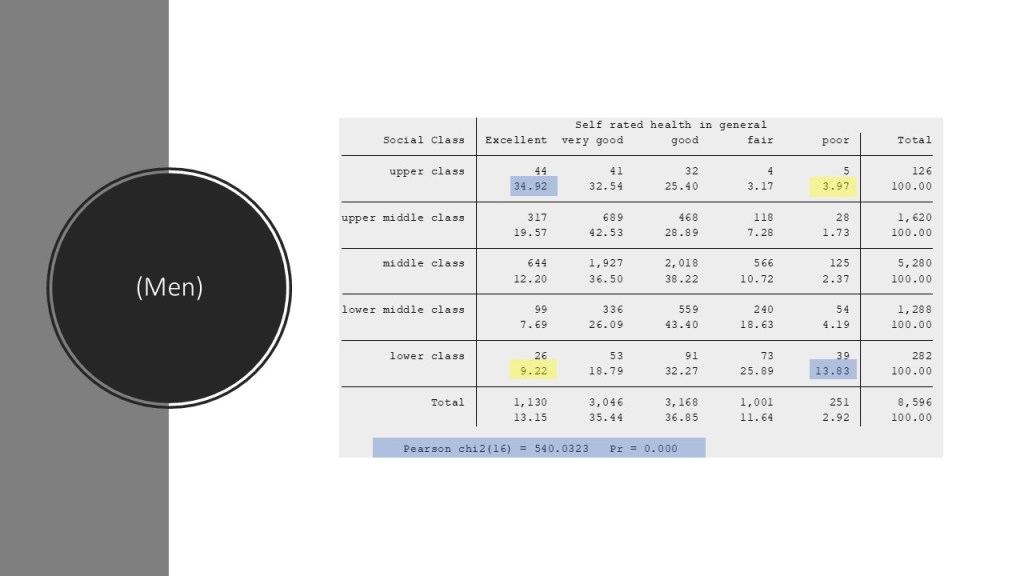
I ran another Chi-Square test with the men participants we have the same result for this analysis.
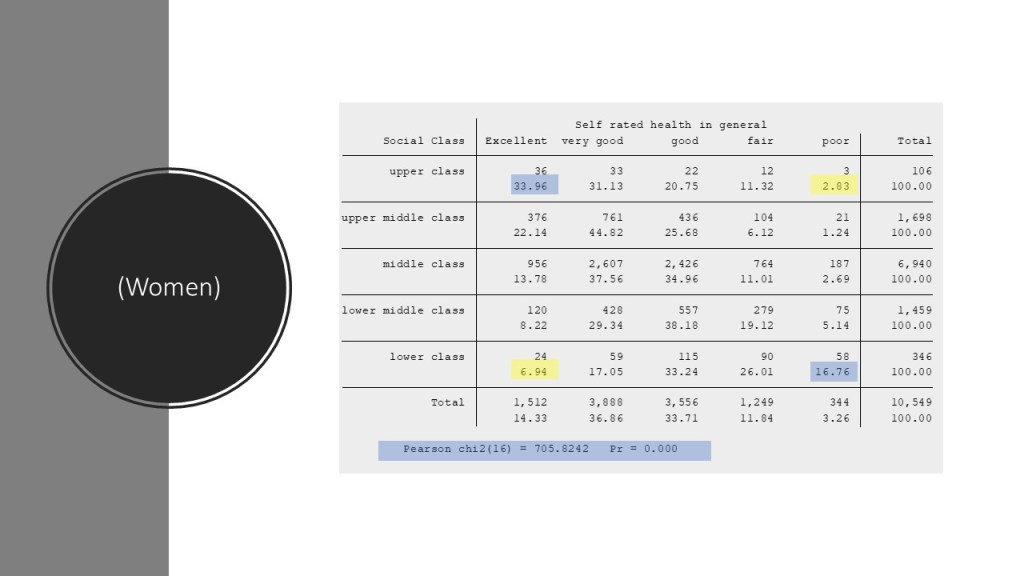
As you can see, within the women category, 33.96 percent of women in the upper class mentioned they have excellent health. As compared to 6.94 percent in the lower class selected Excellent. The P=value of the chi-square test rejected the null hypothesis, and we can say that Social class and health, in general, are not significantly independent.
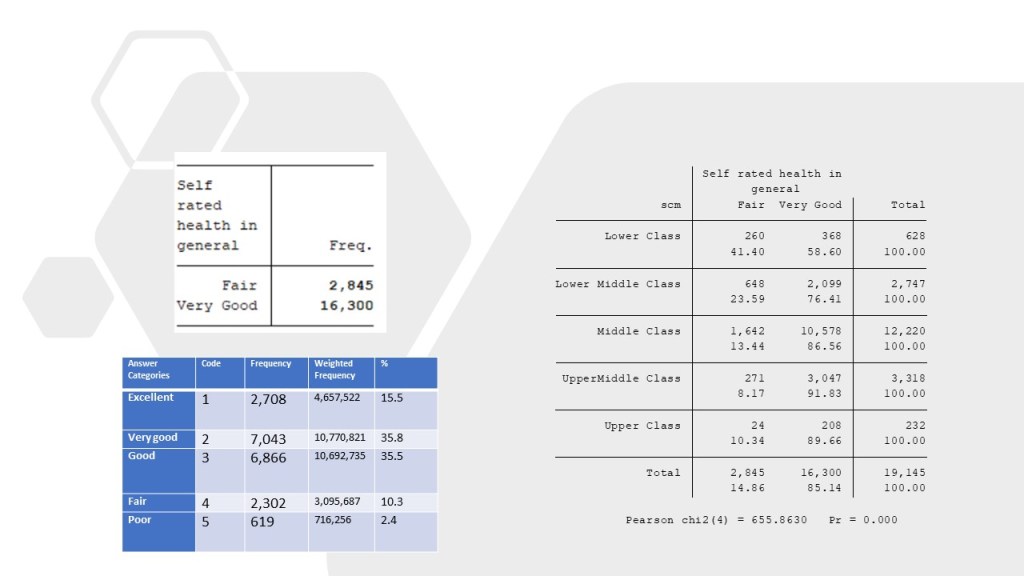
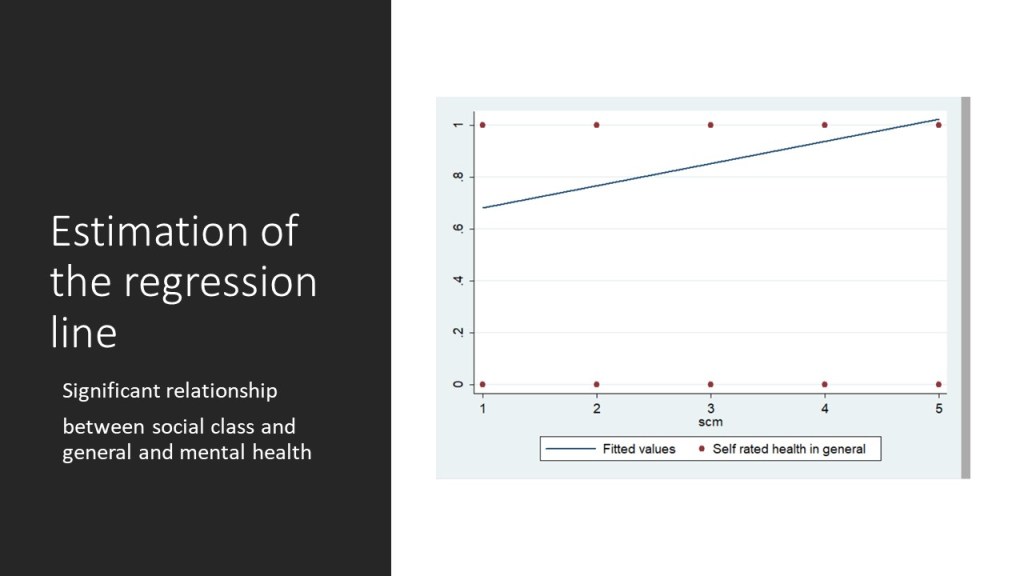
I ran a logistic regression to measure the association between two categorical variables.
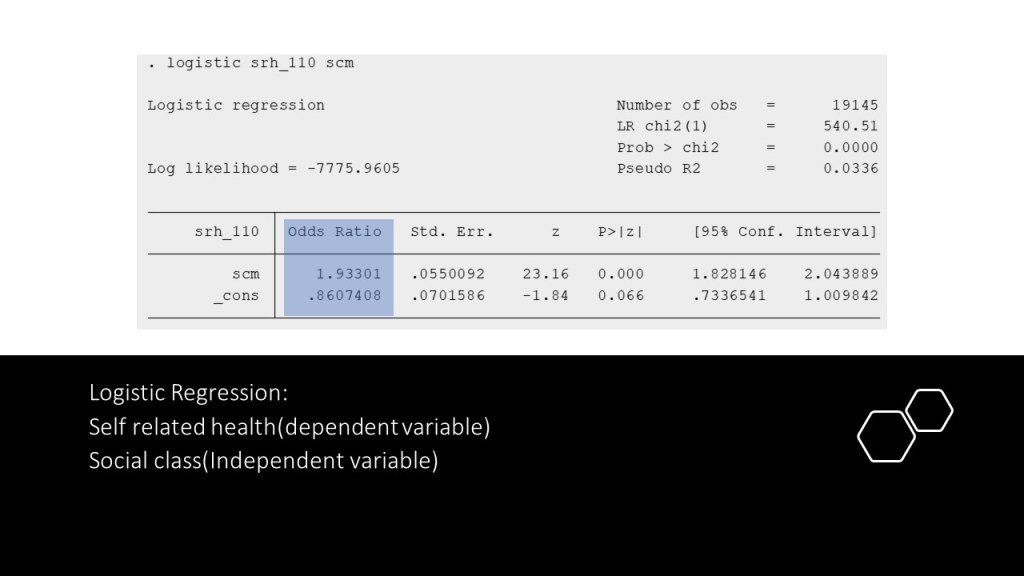
As you can see in our result, the odds ratio is 1.93, which means that the respondents at a given level of social class are 1.93 times more likely to be very good in health than respondents in the next lower level of social class.
The odds ratio makes things a little bit understandable. The odds ratio tells us the percentage of change in odds with each unit of change in the independent variable; in our model, a one-level increase in social class level increases the odds of being at a very good level of health by 93%.
Mohammad Safavi
#Social_Class #Health_Inequality #Chi_Square #Logestic_regression #regression #Canada #Teachig #MohammadSafavi
 SAFAVI, M